
In this post, we are going to test different C++ algorithms for fast median calculation on a microprocessor like Arduino. Our interest in calculating the median is that, in certain applications, it is a better statistic compared to others like the mean.
In the post multiple sampling we saw that to improve precision in data acquisition, the common practice is to take several measurements and combine the different elements in some calculation.
The first candidate that probably comes to mind is to use the mean, as we will see later when implementing a moving average filter. However, the mean has the problem of being affected by noise and especially by spurious points.
Imagine we take ten measurements from a sensor and obtain 9 values between 19.7 and 19.9. But one of the measurements gives an anomalous point with a value of 1000. A single value has caused the mean to jump to almost 58, ruining the entire series.
If you want a more everyday and closer example, 10 people in a room earn an average of 1000 euros. But it could be that 9 are earning 100 euros and the last one 9100. That is the problem with the mean.
In these circumstances, using a statistic like the median can be more representative of the trend. In fact, “robust statistics”, an alternative representation to classical statistics focused on data robustness, uses the median instead of the mean as an indicator of trend.
One of the reasons why the median has traditionally been relegated by the mean as an indicator is not its greater statistical significance but simply that the latter is easy and quick to calculate. Additionally, it is a function we can manipulate mathematically and derive for use in optimization solutions.
In contrast, calculating the median is an expensive process. Moreover, it is not a function we can operate with, and it is not differentiable. However, the median has the advantage of being more robust to the appearance of noise, especially spurious points.
This makes the median very common in acquisition filters, where it shows better behavior, especially in salt-and-pepper noise filtering. We will see this when applying median filtering.
It is commonly considered that calculating the median requires sorting the elements of the sample and taking the middle term. However, more efficient algorithms exist for median calculation.
Here we are going to test three different algorithms with two samples of 100 and 500 elements on a 16MHz Arduino Nano. As we said in the QuickSort post, due to its limitations, it is not the most suitable machine for calculations, and if we need these calculations, we should consider a superior processor. But running tests with 10 elements would be boring!
QuickSort Algorithm
The base case study is to sort the input vector and take the midpoint. For this, we will use the QuickSort algorithm we saw in the last post, as it is one of the fastest algorithms for sorting a vector.
int values100[] = { 3, 53, 70, 56, 18, 85, 27, 14, 37, 94, 9, 55, 40, 60, 52, 61, 15, 65, 13, 8, 57, 97, 69, 4, 35, 82, 22, 73, 59, 68, 78, 24, 21, 36, 71, 80, 74, 39, 17, 12, 29, 76, 49, 51, 30, 90, 88, 2, 84, 50, 62, 28, 77, 43, 5, 16, 58, 26, 32, 34, 1, 75, 66, 95, 38, 89, 67, 87, 100, 54, 92, 81, 25, 83, 46, 33, 23, 45, 96, 99, 79, 48, 11, 31, 7, 6, 19, 91, 93, 44, 47, 98, 86, 41, 63, 20, 72, 10, 42, 64 };
int values100Length = sizeof(values100) / sizeof(int);

int values500[] = { 404, 267, 446, 214, 45, 149, 475, 496, 233, 78, 248, 307, 95, 431, 479, 445, 181, 370, 458, 476, 371, 122, 231, 74, 8, 392, 355, 397, 426, 125, 15, 159, 172, 369, 441, 318, 203, 399, 249, 225, 457, 351, 462, 184, 384, 100, 265, 244, 32, 499, 448, 29, 412, 447, 110, 473, 12, 414, 311, 301, 56, 84, 243, 378, 210, 217, 165, 10, 79, 374, 337, 52, 373, 395, 30, 126, 116, 280, 313, 474, 157, 6, 467, 459, 381, 129, 482, 13, 179, 167, 72, 68, 112, 194, 205, 97, 342, 142, 4, 418, 22, 440, 430, 364, 82, 483, 158, 198, 124, 259, 20, 312, 241, 254, 456, 361, 5, 245, 281, 376, 461, 274, 219, 348, 235, 23, 328, 2, 136, 291, 455, 302, 107, 415, 393, 43, 427, 211, 223, 168, 340, 87, 286, 133, 228, 354, 182, 204, 67, 419, 63, 270, 463, 60, 49, 358, 362, 102, 330, 242, 406, 108, 221, 83, 300, 363, 166, 290, 389, 436, 263, 34, 487, 377, 106, 491, 434, 257, 207, 417, 47, 379, 343, 500, 339, 403, 390, 61, 495, 262, 128, 132, 293, 94, 69, 143, 279, 375, 421, 109, 237, 310, 432, 218, 161, 150, 470, 200, 121, 464, 494, 443, 466, 252, 33, 105, 173, 344, 275, 388, 289, 333, 409, 452, 118, 315, 489, 283, 433, 442, 439, 114, 334, 229, 304, 175, 253, 216, 236, 256, 70, 169, 321, 365, 405, 366, 91, 380, 37, 212, 429, 336, 141, 308, 90, 492, 31, 460, 324, 387, 156, 120, 24, 183, 401, 81, 51, 288, 3, 367, 246, 498, 39, 386, 36, 192, 352, 292, 451, 294, 50, 326, 345, 76, 319, 360, 335, 306, 48, 239, 309, 468, 331, 226, 385, 347, 295, 44, 89, 497, 438, 332, 297, 346, 25, 199, 485, 469, 55, 402, 193, 284, 264, 135, 7, 14, 53, 197, 88, 201, 232, 258, 234, 481, 255, 9, 186, 59, 162, 18, 98, 93, 154, 73, 327, 278, 230, 131, 145, 26, 465, 103, 220, 19, 316, 177, 407, 146, 42, 153, 144, 99, 117, 28, 62, 148, 282, 453, 137, 208, 424, 450, 1, 477, 164, 368, 119, 21, 396, 127, 484, 277, 130, 437, 111, 206, 64, 391, 322, 151, 372, 188, 191, 57, 160, 383, 411, 180, 104, 16, 147, 170, 285, 350, 394, 71, 190, 54, 251, 261, 272, 320, 196, 338, 425, 227, 178, 420, 123, 174, 276, 480, 138, 80, 486, 454, 490, 435, 400, 77, 444, 323, 140, 171, 139, 195, 260, 314, 92, 17, 449, 222, 187, 296, 96, 40, 58, 423, 152, 11, 269, 359, 329, 422, 410, 155, 250, 101, 240, 213, 478, 273, 189, 27, 471, 356, 416, 238, 35, 41, 398, 113, 268, 46, 215, 85, 488, 325, 163, 202, 247, 341, 382, 299, 185, 176, 224, 472, 115, 349, 271, 303, 287, 408, 428, 65, 134, 75, 305, 66, 298, 357, 38, 266, 353, 209, 493, 317, 86, 413 };
int values500Length = sizeof(values500) / sizeof(int);

void setup()
{
  Serial.begin(115200);

  Serial.println("Mediana 100 valores");
  long timeCount = micros();
  QuickSortAsc(values100, 0, values100Length - 1);
  timeCount = micros() - timeCount;
  Serial.println(values100[values100Length/2-1]);
  Serial.println();
  Serial.print(timeCount);
  Serial.println("us");

  Serial.println("");
  Serial.println("Mediana 500 valores");
  timeCount = micros();
  QuickSortAsc(values500, 0, values500Length - 1);
  timeCount = micros() - timeCount;
  Serial.println(values500[values500Length/2-1]);
  Serial.println();
  Serial.print(timeCount);
  Serial.println("us");
}

void loop()
{

}

void QuickSortAsc(int* arr, const int left, const int right)
{
  int i = left, j = right;
  int tmp;

  int pivot = arr[(left + right) / 2];
  while (i <= j)
  {
    while (arr[i]<pivot) i++;
    while (arr[j]>pivot) j--;
    if (i <= j)
    {
      tmp = arr[i];
      arr[i] = arr[j];
      arr[j] = tmp;
      i++;
      j--;
    }
  };

  if (left<j)
    QuickSortAsc(arr, left, j);
  if (i<right)
    QuickSortAsc(arr, i, right);
}
These are the results.
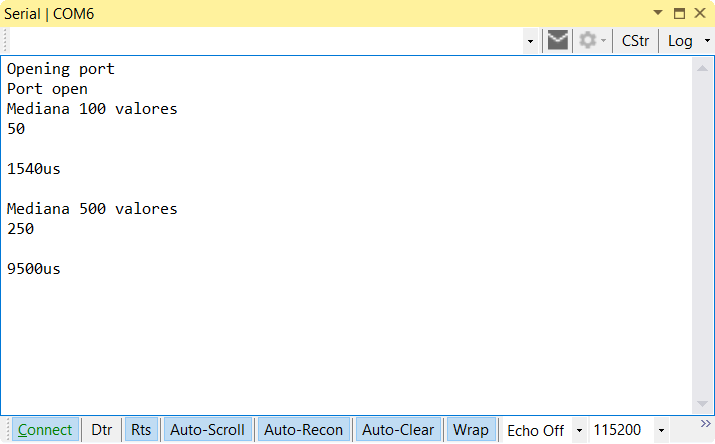
Logically, the times are identical to those obtained in the QuickSort post, 1540us for the 100-element sample, and 9500us for the 500-element sample.
QuickSelect Algorithm
The QuickSelect algorithm allows obtaining the k-th element of a list. It is based on QuickSort developed by the same author (Tony Hoare) and shares the partitioning and pivoting system. However, by avoiding having to sort the entire list, the order of QuickSelect decreases from O(n log n) of QuickSort to O(n) in QuickSelect, maintaining O(n2) in the worst case.
#define ELEM_SWAP(a,b) { register float t=(a);(a)=(b);(b)=t; }

int values100[] = { 3, 53, 70, 56, 18, 85, 27, 14, 37, 94, 9, 55, 40, 60, 52, 61, 15, 65, 13, 8, 57, 97, 69, 4, 35, 82, 22, 73, 59, 68, 78, 24, 21, 36, 71, 80, 74, 39, 17, 12, 29, 76, 49, 51, 30, 90, 88, 2, 84, 50, 62, 28, 77, 43, 5, 16, 58, 26, 32, 34, 1, 75, 66, 95, 38, 89, 67, 87, 100, 54, 92, 81, 25, 83, 46, 33, 23, 45, 96, 99, 79, 48, 11, 31, 7, 6, 19, 91, 93, 44, 47, 98, 86, 41, 63, 20, 72, 10, 42, 64 };
int values100Length = sizeof(values100) / sizeof(int);


int values500[] = { 404, 267, 446, 214, 45, 149, 475, 496, 233, 78, 248, 307, 95, 431, 479, 445, 181, 370, 458, 476, 371, 122, 231, 74, 8, 392, 355, 397, 426, 125, 15, 159, 172, 369, 441, 318, 203, 399, 249, 225, 457, 351, 462, 184, 384, 100, 265, 244, 32, 499, 448, 29, 412, 447, 110, 473, 12, 414, 311, 301, 56, 84, 243, 378, 210, 217, 165, 10, 79, 374, 337, 52, 373, 395, 30, 126, 116, 280, 313, 474, 157, 6, 467, 459, 381, 129, 482, 13, 179, 167, 72, 68, 112, 194, 205, 97, 342, 142, 4, 418, 22, 440, 430, 364, 82, 483, 158, 198, 124, 259, 20, 312, 241, 254, 456, 361, 5, 245, 281, 376, 461, 274, 219, 348, 235, 23, 328, 2, 136, 291, 455, 302, 107, 415, 393, 43, 427, 211, 223, 168, 340, 87, 286, 133, 228, 354, 182, 204, 67, 419, 63, 270, 463, 60, 49, 358, 362, 102, 330, 242, 406, 108, 221, 83, 300, 363, 166, 290, 389, 436, 263, 34, 487, 377, 106, 491, 434, 257, 207, 417, 47, 379, 343, 500, 339, 403, 390, 61, 495, 262, 128, 132, 293, 94, 69, 143, 279, 375, 421, 109, 237, 310, 432, 218, 161, 150, 470, 200, 121, 464, 494, 443, 466, 252, 33, 105, 173, 344, 275, 388, 289, 333, 409, 452, 118, 315, 489, 283, 433, 442, 439, 114, 334, 229, 304, 175, 253, 216, 236, 256, 70, 169, 321, 365, 405, 366, 91, 380, 37, 212, 429, 336, 141, 308, 90, 492, 31, 460, 324, 387, 156, 120, 24, 183, 401, 81, 51, 288, 3, 367, 246, 498, 39, 386, 36, 192, 352, 292, 451, 294, 50, 326, 345, 76, 319, 360, 335, 306, 48, 239, 309, 468, 331, 226, 385, 347, 295, 44, 89, 497, 438, 332, 297, 346, 25, 199, 485, 469, 55, 402, 193, 284, 264, 135, 7, 14, 53, 197, 88, 201, 232, 258, 234, 481, 255, 9, 186, 59, 162, 18, 98, 93, 154, 73, 327, 278, 230, 131, 145, 26, 465, 103, 220, 19, 316, 177, 407, 146, 42, 153, 144, 99, 117, 28, 62, 148, 282, 453, 137, 208, 424, 450, 1, 477, 164, 368, 119, 21, 396, 127, 484, 277, 130, 437, 111, 206, 64, 391, 322, 151, 372, 188, 191, 57, 160, 383, 411, 180, 104, 16, 147, 170, 285, 350, 394, 71, 190, 54, 251, 261, 272, 320, 196, 338, 425, 227, 178, 420, 123, 174, 276, 480, 138, 80, 486, 454, 490, 435, 400, 77, 444, 323, 140, 171, 139, 195, 260, 314, 92, 17, 449, 222, 187, 296, 96, 40, 58, 423, 152, 11, 269, 359, 329, 422, 410, 155, 250, 101, 240, 213, 478, 273, 189, 27, 471, 356, 416, 238, 35, 41, 398, 113, 268, 46, 215, 85, 488, 325, 163, 202, 247, 341, 382, 299, 185, 176, 224, 472, 115, 349, 271, 303, 287, 408, 428, 65, 134, 75, 305, 66, 298, 357, 38, 266, 353, 209, 493, 317, 86, 413 };
int values500Length = sizeof(values500) / sizeof(int);

void setup()
{
  Serial.begin(115200);

  Serial.println("Mediana 100 valores");
  long timeCount = micros();
  QuickSelectMedian(values100, values100Length);
  timeCount = micros() - timeCount;
  Serial.println(values100[values100Length/2-1]);
  Serial.println();
  Serial.print(timeCount);
  Serial.println("us");

  Serial.println("");
  Serial.println("Mediana 500 valores");
  timeCount = micros();
  QuickSelectMedian(values500, values500Length);
  timeCount = micros() - timeCount;
  Serial.println(values500[values500Length/2-1]);
  Serial.println();
  Serial.print(timeCount);
  Serial.println("us");
}

void loop()}

int QuickSelectMedian(int arr[], uint16_t n)
{
  uint16_t low, high;
  uint16_t median;
  uint16_t middle, ll, hh;
  low = 0; high = n - 1; median = (low + high) / 2;
  for (;;)
  {
    if (high <= low)
      return arr[median];
    if (high == low + 1)
    {
      if (arr[low] > arr[high])
        ELEM_SWAP(arr[low], arr[high]);
      return arr[median];
    }

    middle = (low + high) / 2;
    if (arr[middle] > arr[high])
      ELEM_SWAP(arr[middle], arr[high]);
    if (arr[low] > arr[high])
      ELEM_SWAP(arr[low], arr[high]);
    if (arr[middle] > arr[low])
      ELEM_SWAP(arr[middle], arr[low]);

    ELEM_SWAP(arr[middle], arr[low + 1]);

    ll = low + 1;
    hh = high;
    for (;;)
    {
      do ll++; while (arr[low] > arr[ll]);
      do hh--; while (arr[hh] > arr[low]);
      if (hh < ll)
        break;
      ELEM_SWAP(arr[ll], arr[hh]);
    }
    ELEM_SWAP(arr[low], arr[hh]);

    if (hh <= median)
      low = ll;
    if (hh >= median)
      high = hh - 1;
  }
  return arr[median];
}
The results are as follows.
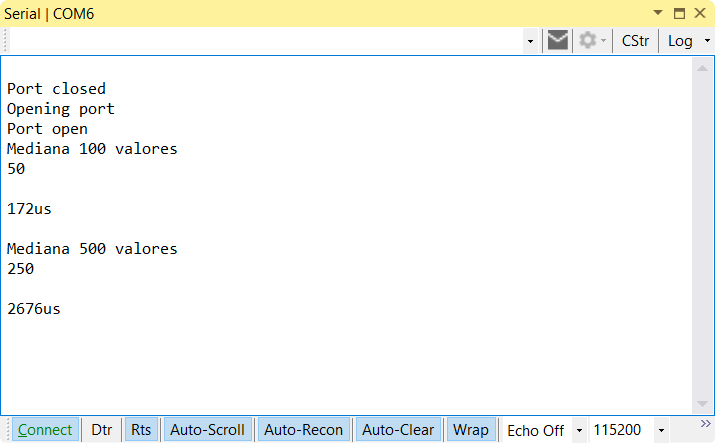
The time for a sample of 100 elements using QuickSelect is 172us, 8.95 times faster than sorting the list. In the case of a sample of 500 elements, the time is 2676us, 3.55 times faster than performing list sorting.
Wirth Algorithm
The algorithm developed by Niklaus Wirth is a variation of Hoare’s QuickSelect algorithm that allows for a simpler and more efficient implementation. It was introduced in 1976 in the book ‘Algorithms + data structures = programs’
int values100[] = { 3, 53, 70, 56, 18, 85, 27, 14, 37, 94, 9, 55, 40, 60, 52, 61, 15, 65, 13, 8, 57, 97, 69, 4, 35, 82, 22, 73, 59, 68, 78, 24, 21, 36, 71, 80, 74, 39, 17, 12, 29, 76, 49, 51, 30, 90, 88, 2, 84, 50, 62, 28, 77, 43, 5, 16, 58, 26, 32, 34, 1, 75, 66, 95, 38, 89, 67, 87, 100, 54, 92, 81, 25, 83, 46, 33, 23, 45, 96, 99, 79, 48, 11, 31, 7, 6, 19, 91, 93, 44, 47, 98, 86, 41, 63, 20, 72, 10, 42, 64 };
int values100Length = sizeof(values100) / sizeof(int);

int values500[] = { 404, 267, 446, 214, 45, 149, 475, 496, 233, 78, 248, 307, 95, 431, 479, 445, 181, 370, 458, 476, 371, 122, 231, 74, 8, 392, 355, 397, 426, 125, 15, 159, 172, 369, 441, 318, 203, 399, 249, 225, 457, 351, 462, 184, 384, 100, 265, 244, 32, 499, 448, 29, 412, 447, 110, 473, 12, 414, 311, 301, 56, 84, 243, 378, 210, 217, 165, 10, 79, 374, 337, 52, 373, 395, 30, 126, 116, 280, 313, 474, 157, 6, 467, 459, 381, 129, 482, 13, 179, 167, 72, 68, 112, 194, 205, 97, 342, 142, 4, 418, 22, 440, 430, 364, 82, 483, 158, 198, 124, 259, 20, 312, 241, 254, 456, 361, 5, 245, 281, 376, 461, 274, 219, 348, 235, 23, 328, 2, 136, 291, 455, 302, 107, 415, 393, 43, 427, 211, 223, 168, 340, 87, 286, 133, 228, 354, 182, 204, 67, 419, 63, 270, 463, 60, 49, 358, 362, 102, 330, 242, 406, 108, 221, 83, 300, 363, 166, 290, 389, 436, 263, 34, 487, 377, 106, 491, 434, 257, 207, 417, 47, 379, 343, 500, 339, 403, 390, 61, 495, 262, 128, 132, 293, 94, 69, 143, 279, 375, 421, 109, 237, 310, 432, 218, 161, 150, 470, 200, 121, 464, 494, 443, 466, 252, 33, 105, 173, 344, 275, 388, 289, 333, 409, 452, 118, 315, 489, 283, 433, 442, 439, 114, 334, 229, 304, 175, 253, 216, 236, 256, 70, 169, 321, 365, 405, 366, 91, 380, 37, 212, 429, 336, 141, 308, 90, 492, 31, 460, 324, 387, 156, 120, 24, 183, 401, 81, 51, 288, 3, 367, 246, 498, 39, 386, 36, 192, 352, 292, 451, 294, 50, 326, 345, 76, 319, 360, 335, 306, 48, 239, 309, 468, 331, 226, 385, 347, 295, 44, 89, 497, 438, 332, 297, 346, 25, 199, 485, 469, 55, 402, 193, 284, 264, 135, 7, 14, 53, 197, 88, 201, 232, 258, 234, 481, 255, 9, 186, 59, 162, 18, 98, 93, 154, 73, 327, 278, 230, 131, 145, 26, 465, 103, 220, 19, 316, 177, 407, 146, 42, 153, 144, 99, 117, 28, 62, 148, 282, 453, 137, 208, 424, 450, 1, 477, 164, 368, 119, 21, 396, 127, 484, 277, 130, 437, 111, 206, 64, 391, 322, 151, 372, 188, 191, 57, 160, 383, 411, 180, 104, 16, 147, 170, 285, 350, 394, 71, 190, 54, 251, 261, 272, 320, 196, 338, 425, 227, 178, 420, 123, 174, 276, 480, 138, 80, 486, 454, 490, 435, 400, 77, 444, 323, 140, 171, 139, 195, 260, 314, 92, 17, 449, 222, 187, 296, 96, 40, 58, 423, 152, 11, 269, 359, 329, 422, 410, 155, 250, 101, 240, 213, 478, 273, 189, 27, 471, 356, 416, 238, 35, 41, 398, 113, 268, 46, 215, 85, 488, 325, 163, 202, 247, 341, 382, 299, 185, 176, 224, 472, 115, 349, 271, 303, 287, 408, 428, 65, 134, 75, 305, 66, 298, 357, 38, 266, 353, 209, 493, 317, 86, 413 };
int values500Length = sizeof(values500) / sizeof(int);


#define ELEM_SWAP(a,b) { register float t=(a);(a)=(b);(b)=t; }

#define median(a,n) wirth_kth_smallest(a,n,(((n)&1)?((n)/2):(((n)/2)-1)))

void setup()
{
  Serial.begin(115200);
  int med;

  Serial.println("Mediana 100 valores");
  long timeCount = micros();
  med = median(values100, values100Length);
  timeCount = micros() - timeCount;
  Serial.println(med);
  Serial.println();
  Serial.print(timeCount);
  Serial.println("us");

  Serial.println("");
  Serial.println("Mediana 500 valores");
  timeCount = micros();
  med = median(values500, values500Length);
  timeCount = micros() - timeCount;
  Serial.println(med);
  Serial.println();
  Serial.print(timeCount);
  Serial.println("us");
}

void loop()
{

}

int wirth_kth_smallest(int a[], int n, int k)
{
  int i, j, l, m;
  int x;
  l = 0;
  m = n - 1;
  while (l<m)
  {
    x = a[k];
    i = l;
    j = m;
    do {
      while (a[i]<x) i++;
      while (x<a[j]) j--;
      if (i <= j)
      {
        ELEM_SWAP(a[i], a[j]);
        i++;
        j--;
      }
    } while (i <= j);
    if (j<k) l = i;
    if (k<i) m = j;
  }
  return a[k];
}
The results are as follows.
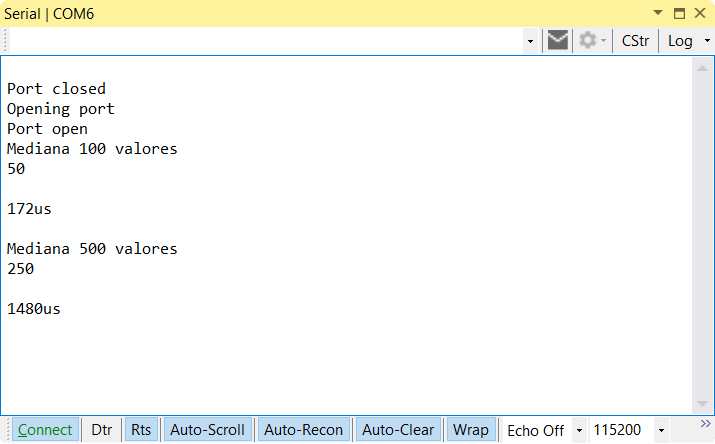
The time for a sample of 100 elements is 172us, 8.95 times faster than QuickSort and exactly the same as the QuickSelect algorithm. In the case of a sample of 500 elements, it’s 1480us, 6.42 times faster than sorting the list, and 1.80 times faster than QuickSelect.
QuickMedian in a Library
What if we put it into a library to make it more convenient to use? Of course, here you have the algorithms in a QuickMedian library for Arduino. librer�a de QuickMedian para Arduino. Enjoy!
Descarga el c�digo
Todo el c�digo de esta entrada est� disponible para su descarga en Github.