In this post, we will study the planetary energy balance, which is a fundamental step in addressing the problem of global energy supply and the viability of using renewable energies exclusively as energy sources. Ecology with clear accounting.
Sometimes, during conversations about energy efficiency with friends or professionals in the sector, I have seen surprise when I have been critical of renewable energies. This may seem, at first, an attitude contrary to respect for the environment and energy efficiency, but it is not. Logically, we are all against pollution, climate change, and the destruction of ecosystems.
However, it is essential to conduct a preliminary study of technologies (a rough estimate, so to speak) before labeling a technology as truly environmentally friendly. Particularly and especially, we should be wary, as a matter of common sense, when the one proclaiming the benefits of a system is a company with economic interests at stake. In these cases, it will be our role as experts on the subject, and aware of the energy problem, to perform the calculations clearly and truthfully, explain them when necessary, debate or expand them with new information when possible, and always denounce the lies we observe.
What energy sources do we have available?
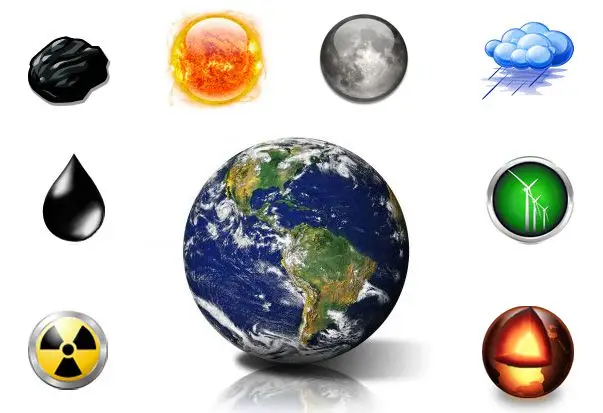
The planet obtains its energy from different energy sources. Among these sources, the largest, by a wide margin, is the energy that comes from the sun. The other available energy sources are gravitational attraction (tidal energy), the thermal gradient of the Earth’s crust (geothermal energy), and reserves of radioactive materials.
The rest of the available energy sources originate from the sun. We simply harness them in different ways, for example, through the convective movement of air masses, the evaporation of water in the ocean, photosynthesis in biomass… These ways of utilizing solar energy are summarized as:
- Directly - Solar thermal and photovoltaic.
- Indirectly – Hydraulic, wind, aerothermal, and biomass.
- Stored – Fossil fuels.
As can be seen, practically all available energy ultimately comes from the sun. Stored energy (in fossil fuels, for example) is by definition finite and, therefore, cannot be considered a long-term energy source. It is a “bubble” that has allowed us to obtain large amounts of energy in recent years, but it is not sustainable over time.
Necessarily, any society that wants to be sustainable in the long term and respectful of the environment must obtain its energy from the sun. That is, it must maintain a balance, consuming at most the amount of energy it is capable of obtaining from the sun (whether directly or indirectly). But,
Is the sun’s energy sufficient for current human consumption?
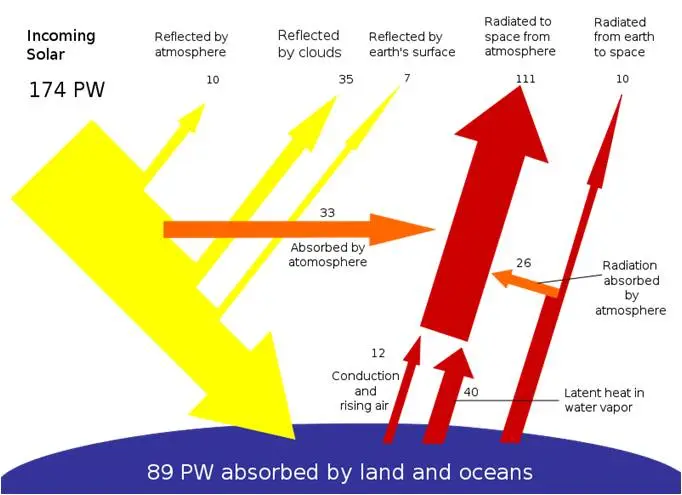
In summary, the maximum energy we receive from the sun, i.e., the total radiation incident on the planet, is 174 · 10^15 W. On the other hand, estimates put the average global consumption at 15 · 10^12 W (as of 2005). This means that the sun provides approximately 10,000 times the energy consumed by society. Various studies quantify this amount between 4,000 to 8,000 times, but we will accept the value of 10,000 as valid, taking an optimistic scenario.
Considering an overall average efficiency of 10% (which is also really optimistic) for the complete process of capture, transformation, transport, storage, and consumption, this means that it would be necessary to capture approximately 0.1% of the energy received from the sun to fully supply global energy consumption. While this figure means that supplying human consumption with solar energy is theoretically viable, I emphasize that it is not as positive a figure as it seems.
For example, even in a very optimistic scenario, it would require that every 30x30 meter square of land contain a 1 square meter collector in operation. This ratio would have to occur over the entire surface of the planet, including oceans, polar ice caps, and deserts… This is technically impossible, not to mention whether we have enough materials to undertake such an infrastructure, and the environmental catastrophe it would entail. Finally, we must consider that global energy consumption grows exponentially each year.
The logical conclusion is that renewable energies, by themselves, do not provide enough energy to meet global demand. It is important to dedicate our efforts to increasing the efficiency of solar-based energy sources, as well as reducing their installation and maintenance costs. But it is absolutely essential to reduce energy consumption by adopting savings measures and increasing efficiency.