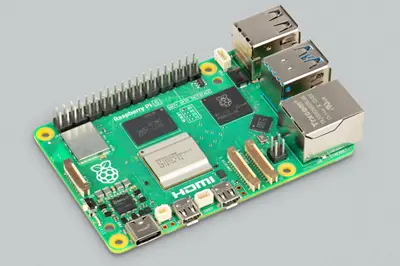
Against all odds, Raspberry Pi surprised us today with the announcement of the new Raspberry Pi 5 model of its popular Linux microcomputer.
The new Raspberry Pi 5 model wasn’t expected until 2024. But here it is! And it arrives loaded with new features, significantly more power, and at a similar price.
At the heart of the Raspberry Pi 5 lies the new BCM2712 chipset. A 16nm system-on-chip (SoC) that combines a 64-bit quad-core ARM Cortex-A76 CPU with a VideoCore VII GPU.
The Cortex-A76 is a processor, compared to the A72 used in the model 4. This is a very significant leap that translates into more than double the power of a Raspberry Pi 4.
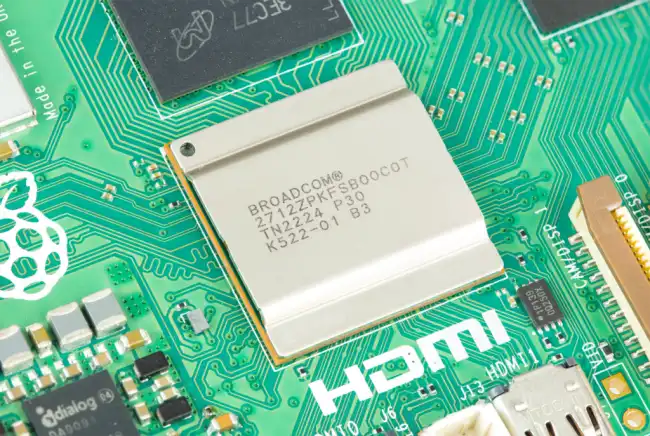
Meanwhile, the VideoCore VII GPU supports OpenGL ES 3.1 and Vulkan 1.2, enabling a wide range of graphics and gaming applications. It also features a 4Kp60 HEVC decoder capable of smoothly playing 4K videos.
Raspberry Pi 5 maintains and improves its wireless connectivity compared to the previous model, with Dual Band 802.11ac Wi-Fi. It also includes support for Bluetooth 5.0 / Bluetooth Low Energy (BLE).
Raspberry Pi 5 keeps the microSD card as the primary form of storage. According to the manufacturer, it incorporates a high-speed microSD with support for SDR104 mode, allowing for “fast and reliable access.”
Personally, I really miss them not including eMMC as storage, instead of the SD card which is a source of problems (I don’t consider it fast or reliable). At the very least, it would be nice if it were an option, even at a higher price, as other manufacturers do.
Regarding peripheral connections, we find two USB 3.0 ports with simultaneous operation up to 5Gbps. They are accompanied by two more USB 2.0 ports. It also has a connector for PCIe devices, but it will require a HAT that is not yet available.
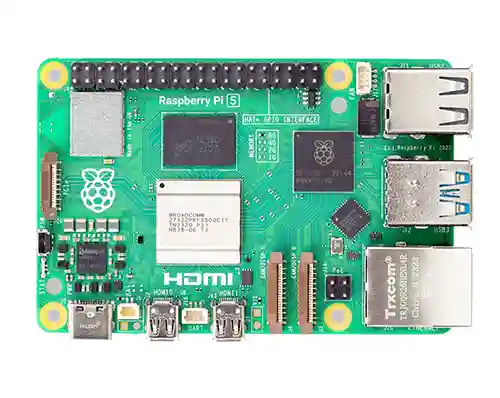
It also incorporates the Ethernet port, which this time becomes Gigabit. It includes support for PoE+ (Power over Ethernet Plus), although for that, an additional HAT is needed which is also not yet available.
{ “CPU and Memory”: [ { “label”: “CPU”, “value”: “Arm Cortex-A76 64-bit quad-core @2.4GHz (512KB L2 per-core, 2MB L3 shared)” }, { “label”: “Memory”, “value”: “4GB or 8GB PDDR4X-4267 SDRAM” }, { “label”: “GPU”, “value”: “VideoCore VII @800Mhz (OpenGL ES 3.1, Vulkan 1.2)” } ], “Connectivity”: [ { “label”: “HDMI”, “value”: “Dual 4Kp60 output” }, { “label”: “WiFi”, “value”: “Dual band 802.11ac” }, { “label”: “Bluetooth”, “value”: “5.0 / BLE” }, { “label”: “Ethernet”, “value”: “Gigabit with PoE support” }, { “label”: “USB”, “value”: [“2x USB 3.0 5 Gbps”, “2x USB 2.0”] } ], “Devices”: [ { “label”: “Decoder”, “value”: “HEVC 4Kp60” }, { “label”: “MIPI Transceivers”, “value”: “2x 4-lane for camera/display” }, { “label”: “microSD Interface”, “value”: “High-speed SDR104” }, { “label”: “PCIe”, “value”: “2.0 x1 for fast peripherals” }, { “label”: “GPIO Header”, “value”: “40-pin standard Raspberry Pi” }, { “label”: “Clock”, “value”: “Real-time clock” } ], “Power and Dimensions”: [ { “label”: “Power”, “value”: “5V/3A (5V/5A recommended)” }, { “label”: “Dimensions”, “value”: “85 x 56 mm” } ] }
Regarding connections and “tinkering,” which we love on this website, Raspberry Pi 5 maintains the traditional 40-pin GPIO header, compatible with previous models.
The form factor and dimensions are maintained according to the standard of previous models. Therefore, it is likely to be compatible with many existing mounts, accessories, and cases.
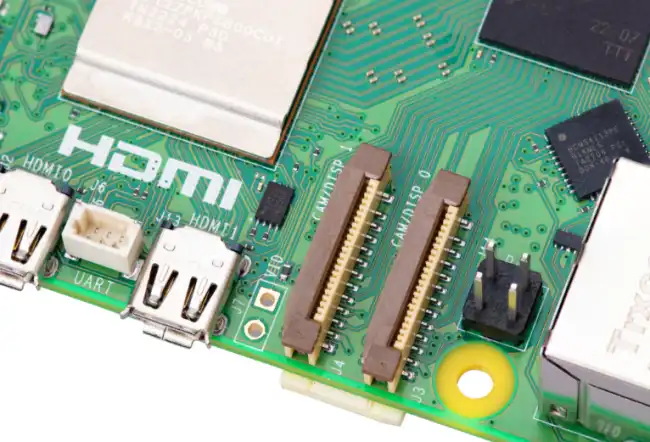
However, the layout of some elements has changed. Some connectors have been removed, others added, and the Ethernet connector has been moved. So verify this if you plan to do a replacement.
Regarding power, the Raspberry Pi needs a 5V/3A USB-C power supply. However, to operate at maximum power, they offer a new 5V/5A charger.
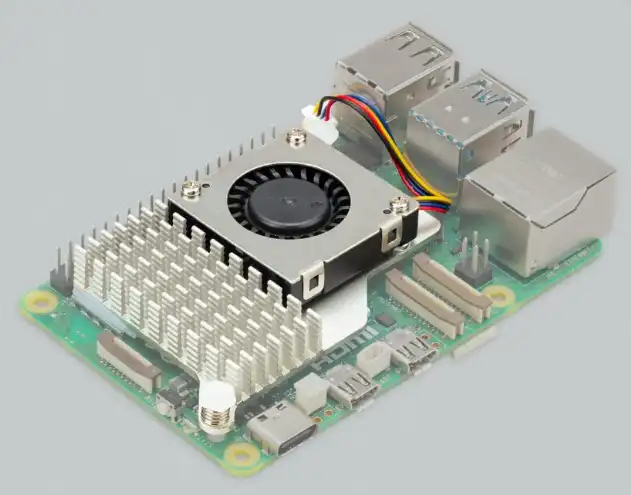
Regarding consumption and temperature, which we know was one of the big problems of the model 4, the new Raspberry Pi 5 consumes significantly less, and therefore heats up less.
However, for continuous use, it is still recommended to include a fan. For this, we have a connector on the Raspberry Pi 5’s own PCB.
The new Raspberry Pi 5 arrives at a price very similar to the current model 4:
- $60 for the 4GB RAM version
- $80 for the 8GB RAM version
Manufacturing will begin next October. It is already available for pre-order, and it is foreseeable that we will soon find it at all our usual suppliers. Although I already warn you that it won’t be at that price that we see it (expect around 150€).
As a personal comment and reflection on the news, I am sad to see that Raspberry Pi is progressively moving further away from its original purpose. Which, in theory, was to provide a cheap platform so that everyone had access to computing and Linux.
We are getting more and more power, even if it means an increase in cost. We all know it reached absurd levels where it was above much more powerful “conventional” computers.
Along the same lines, I still don’t understand why the GPIO header hasn’t been improved. Or why there are no low-cost versions (it is supposed that 1GB and 2GB versions will appear in the future). Or that there is a version with eMMC. Which, for me, are the problems it should solve.
Problems that have been solved in other micro-PCs like the Orange Pi 3B, which in a way have captured the original spirit of the project better than Raspberry Pi itself.
In any case, we finally have the long-awaited Raspberry Pi 5. A much more powerful and improved model compared to previous ones, and one that will surely be very well received by the community.
References: