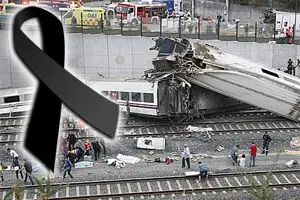
Yesterday at 8:42 PM, a tragic railway accident occurred in Santiago de Compostela, as it passed through the Angrois area, which has so far resulted in 65 fatalities out of 140 injured. Logically, an accident of this magnitude raises many questions about how such an event is possible and what responsibilities are attributable to each of the agents involved.
The purpose of this post is to answer some of these questions from a technical point of view, always with the logical reservations and precautions due to the lack of available information at the moment, which will be expanded upon in the coming hours, as well as respect for the victims and injured of the accident and their families.
Possible Causes
In principle, the most probable causes for a modern train to suffer a derailment of the type and magnitude that occurred are damage to the track, the appearance of an obstacle on the track, collision or impact with another vehicle, and, logically, excessive speed.
In this case, given that no type of obstacle has been observed and the characteristics of the track, which is modern and recently built, from the first moment the most plausible cause appears to be excessive speed by the accident train. But how is this possible with the control means available today? To answer this, it is necessary to briefly explain the characteristics of the track, the train, and the controls involved.
Track Typology
For historical reasons, Spain has a great variety of track gauges, and we carry the problems associated with this diversity to the present day. The gauge mostly implemented in Spanish territory is the so-called Iberian Gauge or Renfe Gauge, of 1,688 mm. However, the international European standard is the UIC standard gauge, of 1,435 mm. In Spain, new high-speed rail (AVE) tracks are built for this gauge.
The accident train was traveling on a modern high-speed track adapted for AVE journeys of up to 380 km/h. However, not all sections of the track are enabled for this maximum speed. Specifically, the train was traveling on a section of tight curves, of high difficulty, whose speed limit is 80 km/h.
The Accident Train
The derailed train is an Alvia, with eight carriages and 2 power cars. The Alvia series is a high-speed train, with a maximum speed of 250 km/h, specially designed to run on both conventional broad-gauge tracks and modern narrow-gauge AVE-type lines. For this purpose, it has a device that allows the wheel gauge to be varied, adapting to both types of track.
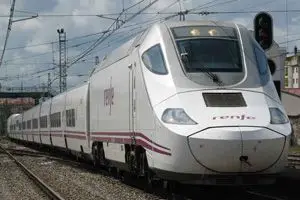
The accident model is the so-called 730, a variation of the 130 model, both manufactured by Talgo. The 730 model is a hybrid train, which can run on electrified and non-electrified tracks. For this, in addition to the usual electric motor found in all trains, it incorporates a diesel engine in at least one of the power cars.
Types of Controls Involved
How is it possible that a modern train, running on a modern track, suffers an accident due to excessive speed? For this, we must briefly mention the different standards of controls involved.
The ASFA standard (Signal Announcement and Automatic Braking) is the traditional train control system implemented by RENFE since the 1970s. It consists of a series of beacons distributed along the tracks, which exchange information with the vehicle as it passes over the beacon. At that moment, the train receives information and, in turn, transmits its position and speed. The rest of the time, the train’s position and speed are estimated from the data received at the last beacon passage.
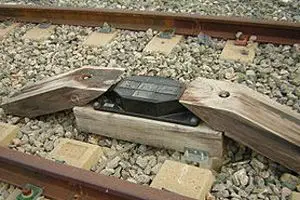
The fundamental objective of ASFA control is to prevent the train from passing a stop signal due to human error, eliminating collisions and impacts between vehicles. For this, the track is divided into a series of “virtual” sections. The control verifies that each section is occupied by only one vehicle, thereby reducing (and almost eliminating) the possibility of train collisions, which were relatively frequent in earlier times.
On the other hand, the ERTMS standard (European Rail Traffic Management System) is the new train control system developed jointly for all of Europe. It is in turn composed of two standards. ETCS, which represents a modernized and expanded version of ASFA, and GSM-R, which provides continuous radio communication with the control center (unlike the traditional method, which exchanges information with the control only at beacon passages).
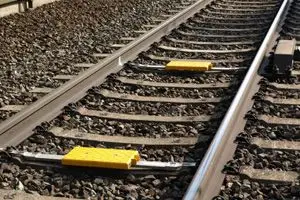
The ETCS system is not only designed to stop the train and avoid collisions between vehicles, but it is also designed for high-speed lines where it is difficult or impossible for a driver to see traditional signals. Therefore, in the new system, the track provides the train with the maximum allowable speed, and transmits it visually via a screen to the driver. There are several modes of operation, from more to less automated. In the most advanced, the system is capable of automatically adjusting the train’s speed, although these systems have not yet been put into operation.
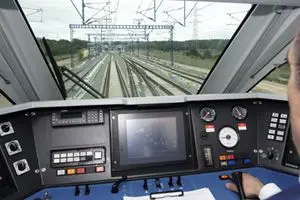
In summary, regardless of the degree to which ETCS is operating, it is practically impossible for a train with an ETCS system to exceed the maximum speed of the track. Even in the case where the train’s speed is still controlled by the driver, the train itself provides visual and acoustic alarm signals that completely eliminate the possibility of human error.
So, how is it possible that on a modern track with ERTMS, like the one in question, the allowable speed for the track is exceeded? Because for the system to work it has to be installed both on the track and on the train. The ERTMS system is installed and functional only on AVE trains, so the accident train was operating with the traditional ASFA. Therefore, the responsibility for setting the speed depends solely and exclusively on the driver, being susceptible to human error, such as a lack of attention.
Observed Damage
One of the questions arising on social networks is whether the observed damage is compatible with a derailment, or if, on the contrary, it shows signs of another type of incident, such as a terrorist attack or a collision with another vehicle. In particular, questions are asked about the displacement of the carriages, the lifting of more than 6 meters of one of them, and that one was split, sectioning its structure.
In principle, and without being able to assure anything, my technical opinion is that the observed damage is perfectly compatible and explainable solely as a consequence of the derailment, without the need for an additional cause. The forces and energy developed during an accident of these characteristics are enormous and are sufficient by themselves to cause the damage produced.
Regarding the charred train and the explosion, it is also compatible with the derailment hypothesis since, as mentioned, the accident train is a hybrid train, which incorporates significant reserves of diesel in at least one of the locomotives. Therefore, it is plausible that the accident caused the ignition of the fuel, and thus the explosion and charring of one of the carriages.
Conclusion
If we take into account the factors explained above, it is concluded, a priori and with the available information, that the most plausible cause of the accident is human error. The excessive speed, the exclusive responsibility of the driver, combined with a modern track with the latest control means, traversed by a train that, despite being modern, has an inferior control system, and coupled with the characteristics of the train and the layout and difficulty of the curve, provide a convincing explanation of the facts.
It may be, as is being discussed, that the driver was accustomed to the safety of the ERTMS system, and this favored the error when driving an ASFA train. It could also be that due to the 5-minute delay, although small, the driver had instructions from the control center to increase his speed. Or it could be, as is also being said, that he had economic reasons related to the reduction of bonuses in case of delay.
In any case, it is clear that an investigation will have to be opened to determine the vehicle’s speed at the time of derailment, based on control data and records obtained from the black boxes. The statements of witnesses, as well as both drivers who survived the accident, will also be of vital importance.
In my opinion, totally personal, if it is proven that the vehicle was traveling on the track at 160 km/h, that is, double the allowable speed in the accident section, criminal responsibility must be demanded both for the drivers and for those in charge of the line control. If these data are confirmed, regardless of the control system used, both knew perfectly well that this vehicle was traveling at excessive speed, and of the risks that this entailed and which, unfortunately, have become reality.