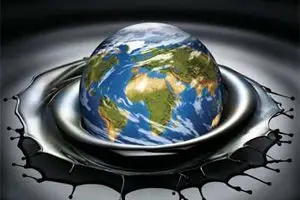
We are used to hearing journalists and certain, so-called, environmentalists in the media harshly criticize oil and fossil fuels. How polluting they are, how bad they are, accompanied by images of polluting chimneys and black clouds of smoke. This way of thinking has gradually permeated public opinion to the point that, paraphrasing the (bad) joke about tobacco, it seems that “oil killed my father and raped my mother.”
Don’t get me wrong, I’m not trying to praise oil lobbies or encourage you to consume more oil. But these claims lose their force when made by someone with their latest-generation smartphone, from the climate-controlled comfort of their room, and with a 200 HP car in the garage (or the desire to have one). We should not forget that, without a doubt, the society we enjoy today would not be possible without oil. All our technological advances, even those that will allow us to replace oil use in the future, cannot be developed without using it.
Let’s not fall into the easy hypocrisy of thinking that oil is used solely by the interest of powerful groups. Oil has exceptional characteristics that have made it so widely used. Its extraction is relatively simple. It has an enormous energy density, both per unit of mass and volume. Its storage is safe and does not require complicated facilities. It is easily transported, quickly refueled. To convert it into energy, you simply need to combust it. The equipment for this, engines and boilers, is simple and well-known to our technology.
The biggest problem with oil, let’s not kid ourselves, is that it runs out (see this link). None of the available technologies meet all the necessary characteristics to replace it, nor is it foreseeable that they will be able to do so in decades. But what is truly dangerous is that we do not have data on the environmental consequences these other technologies may have when massively deployed. Let’s hope that, as the saying goes, the cure isn’t worse than the disease.
It may surprise you, but when oil was discovered it was considered an energy utopia. A substance that had stored solar energy for millions of years and whose combustion only released H2O and CO2, exactly the same as living beings do. Both substances were naturally present in the atmosphere and were not considered pollutants. It wasn’t until decades later, when its massification began to release tons of CO2, that concern arose about the effect of these emissions on the greenhouse effect and possible climate change.
It is necessary to conduct life cycle impact studies for the possible substitutes for oil, when they are used on a massive scale to meet global demand. We do not know the effect that extracting semiconductors for photovoltaic panel generation may have, nor their recycling. We do not know the impact of extracting materials, for example lithium, in sufficient quantities to produce enough batteries to power the world’s vehicle fleet. We do not know the environmental effect of massively deploying enough windmills or solar power plants to meet our electricity demand. And the worst part is that we shouldn’t worry about the effects we are currently able to calculate and quantify, but about those we still don’t know and will discover after their deployment (as happened with CO2).
The problem of the environment and energy is not oil or fossil fuels, it is our disproportionate consumption of energy. It is our need to change our smartphone for the latest model every one or two years. It is setting the thermostat to 21ºC in summer and walking around the house in long sleeves. It is still seeing people accelerate from a traffic light like “Fast & Furious,” even though they see another red light 10 meters away. Perhaps this is the true guilt of fossil fuels. They made vast amounts of energy available to us and we have become accustomed to wasting it. We have become accustomed to a standard of living and technical characteristics of our machines that we are not willing to give up. We don’t want a slower car, or one that accelerates more slowly, or with less range.
Nor will it help us to think of a future of white, spotless cities, supplied by non-polluting technologies. Technologies that allow us to maintain our habits with zero impact on the environment. These technologies do not exist, and they never will. Any technology we use will have an effect on the environment. This way of thinking only serves to deny our responsibility for the problem. It’s not my fault for leaving the window open with the heating on. It’s the fault of “those in power,” who don’t want clean technologies to see the light of day.
So the next time we look for culprits for the state of the environment and the energy landscape. Or when you hear criticism of the role of oil and fossil fuels. Before even starting to look for grand conspiracies and shifting the blame to the pressure of large economic groups, I propose as an exercise in self-criticism that we all first look in the mirror. Myself first.