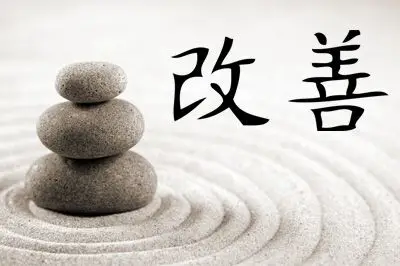
This time we are going to talk about the Kaizen spirit, one of those words that (more or less like gintonic) has recently become fashionable within the realm of increasing productivity. For those who don’t know, the Kaizen spirit is a philosophy of Eastern origin associated with production processes and continuous improvement.
Personally, I have always felt close to the Eastern way of thinking. Since childhood, I have been involved in martial arts, practicing Judo, Taekwondo, and Kung Fu. Therefore, although it’s inevitable that my way of thinking will always be primarily Western, I have managed to approach and understand the differences between the Eastern and Western mentalities.
I say this because I often find that we Westerners insist on importing Eastern concepts at all costs. We discover a new concept in the field of quality or productivity that works for them. Then we say “I want the same thing,” we import it and Westernize it. We standardize it, regulate it, turn it into something rigid. Frequently, we put someone in charge of its implementation who doesn’t truly understand its foundation, its meaning. We teach them some rules, tell them that to be an expert in the area they have to learn them by heart. Even worse, we tell them to audit and teach them to others. That’s when my hair stands on end.
But well, then if it’s not a procedure, if it’s not something that can be summarized in a few rules… What is this Kaizen thing?
What is Kaizen
Kaizen (改善) literally means “good change.” That is, it is the Eastern equivalent of our traditional “continuous improvement.” Kaizen is a philosophy associated with continuous improvement processes, productivity improvement, and Lean Manufacturing.
Nothing really new. I don’t have to go to the East to be told that changes are good, or to be shown the importance of continuous improvement… or do I?… Well, actually yes.
If you translate and limit Kaizen to its Western equivalent of “continuous improvement,” you have just stripped the concept of all its meaning and depth. You have only managed to scratch the surface. Kaizen is not a series of procedures, rules, and documents that you must rigorously complete. Kaizen requires a complete change in mentality. It means embracing change, abandoning static positions (as Bruce Lee said), learning to live in a dynamic and flexible way, constituting a process that never ends.
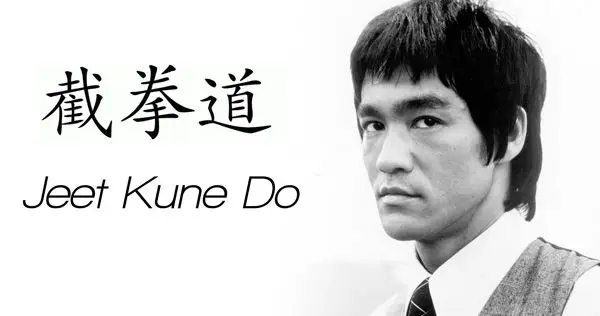
Kaizen is a concept, a life philosophy that applies to all areas, both personal and professional, and provides the flexibility demanded by modern times. Traditional companies have based their stability on their size and their strength in the market. They are the equivalent of a large static post, which stays upright thanks to having weight at its base. But no matter how much weight is put on it, inevitably, it can always be knocked down.
Kaizen reminds us that there is another way to maintain balance, something as simple as the way a ball works. You cannot make a ball fall. If you push a ball, it rolls, keeping its center of gravity in the same place. The ball has “found” a new way to maintain balance, which instead of being based on staticity and force is based on dynamics, movement, and continuous change.
Nature itself has taught us that the species with the highest probability of survival is not the strongest, but the one that best adapts. For this reason, flexibility is becoming increasingly important in companies and modern machinery. We have moved from a time of mass production where what mattered was acquiring machinery that manufactured large quantities of parts, to a current situation where machinery that allows us flexibility and rapid changes in manufacturing is more interesting.
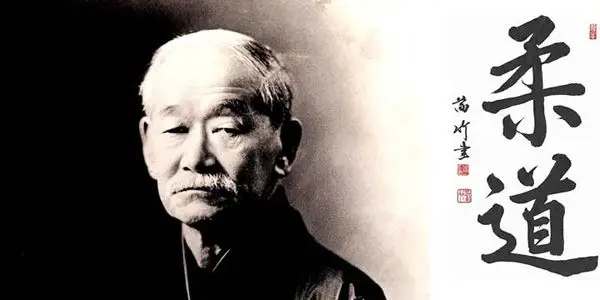
To illustrate the concept, I will tell the anecdote of Jigorō Kanō, the founding master of Judo, who was walking through the garden of his Dojo with his wife. A heavy snowfall had occurred, and he observed how the thick branches of the strongest trees held a great amount of weight, but inevitably ended up breaking. The less strong trees, with thinner branches, ended up bending under the weight of the snow. The snow fell to the ground, and the branch returned to its place without breaking. With this idea, he created Judo, which can be translated as “the way of flexibility.”
The 10 points of the Kaizen spirit
The Kaizen philosophy is often summarized in the 10 points of the Kaizen spirit, which are as follows:
- Abandon fixed ideas, reject the current state of things
- Instead of explaining what cannot be done, think about how to do it
- Immediately implement good improvement proposals
- Do not seek perfection, gain 60% from now
- Correct an error immediately and on the spot
- Find ideas in difficulty
- Seek the real cause, respect the 5 whys and then look for the solution
- Consider the ideas of ten people instead of waiting for the brilliant idea of one
- Test and then validate
- Improvement is infinite
It’s clear, right? They are easily understandable. A decalogue of 10 rules to be followed to the letter, right?… Well, absolutely and categorically NO. On more than one occasion, I have seen these points followed “to the letter” and the argument “60% is enough” brandished. This can lead to assimilating Kaizen as “that’s good enough,” which is not even remotely part of its meaning.
Again, we must look for a deeper meaning, beyond the surface. The 10 points of the Kaizen spirit are not rules, nor rigid norms. They are a compilation of advice that, well understood, help us remember the path when we are tempted to abandon it, similar to how a master would do.
What matters are not the phrases themselves, but the concepts behind them. They remind us not to remain static, not to wait for solutions to be perfect before starting improvements (which is not the same as “that’s good enough”). Not to lament in times of adversity, to keep looking forward, and that the most difficult times are when we need to keep working.
Along these lines, I’ll tell you another story, about an Eastern master who is watching his house being destroyed by a river flood. The Westerner, with his way of thinking, asks him, “How can you be so calm? Why don’t you scream or cry?” And the wise man replies, “Would it do me any good?” Instead, the master gets up and begins to collect wood to build his new house.
As you can see, everything surrounding the Kaizen spirit is philosophical and much deeper than it may seem at first glance. The 10 points of the Kaizen spirit are phrases that in themselves are very sensible, but we must make the effort to interpret them from an Eastern prism, “parking” our Western mentality for a moment.
Conclusion
The Kaizen spirit is a life philosophy related to the Eastern way of thinking. Without a doubt, it provides many positive ideas that will be useful both in your personal life and, by extension, in your professional life.
However, the Kaizen spirit must be interpreted from the point of view of an Eastern mentality, and given a certain philosophical background. If you reduce Kaizen to a decalogue of strict rules, or to something learned in a business management master’s degree, you strip it of all meaning. Of course, it is doubtful that in this way you can implement a system based on Kaizen, or get any useful results from it.
Finally, not everyone will manage to internalize the Kaizen spirit. The Western mentality generally likes to have stability, defined positions, and responsibilities. We find it difficult to accept a way of life based on continuous change. Furthermore, we have become accustomed to devaluing the importance of philosophy and thought, as outdated concepts that do not fit the current pace of life.
Like any philosophical branch, Kaizen is probably not something that can be learned by reading a book or a blog. Perhaps it is one of those things you internalize days after reading it, while walking in a park. As advice, I can only tell you to try to open yourselves to these ways of thinking, even if only for brief periods, and that when you read or talk about the Kaizen spirit, try to go beyond, and not just stay on the surface.
Without a clear understanding of the sense of movement, true progress cannot be expected. Jigoro Kano (1860-1938) Martial arts master
Truth is the relationship with the opponent; constantly in motion, alive, never static. Bruce Lee (1940-1973) Actor, martial arts master, and Chinese philosopher
He who would pursue constant happiness and wisdom must accommodate frequent changes Confucius (551 BC-478 BC) Chinese philosopher