
Wokwi is a free online simulator that allows users to create and test electronic circuits incorporating devices like Arduino, ESP32, or similar.
This resource is ideal for beginners in the world of electronics as it provides the possibility to experiment with different components and designs without having to invest in expensive materials. It is also useful as a testing tool to speed up development.
One of the main advantages of Wokwi is that it allows for easy real-time testing, visualizing how the circuit behaves under different conditions. It features a measurement tool that allows verifying signal values at different points in the circuit.
Wokwi is a good alternative to more well-known options like TinkerCAD. Personally, I find it a much more powerful solution and the interface is more pleasant and professional.
The Wowki library features a wide variety of electronic components that can be used in circuit creation (such as resistors, capacitors, diodes, transistors, LEDs, or TFTs).
Precisely one of Wokwi’s strong points is its ability to simulate graphical aspects like LED strips and TFT displays, which can be very useful for testing and developing projects involving these types of devices.
Furthermore, it also includes a wide selection of examples and tutorials that help users understand how the different components work and how to use them in their designs (or simply serve as a base or inspiration).
Wokwi is compatible with C++ and MicroPython programming languages, allowing users to write and test their code directly in the simulator. We can incorporate libraries from the usual repositories into our code.
At any time, we can download the generated code to use it on real devices. Another interesting feature of Wokwi is that it allows users to share their projects with other users (which can be useful for collaborating and learning from other developers).
Wokwi also incorporates a serial port simulator via GDB Debugging. Although functional, it is not excessively practical. Additionally, it features a logic analyzer similar to PulseView, which allows users to debug and verify the operation of their code.
Wokwi also emulates WiFi communication, even MQTT communication, on boards that have it, such as the ESP32. It is also possible to connect real devices to the simulator via USB connection and see how they behave in real-time.
Wowki is free, although it has a premium version available for a cost of €7 per month. This includes additional functions such as improvements to the ESP32’s WiFi, the ability to add libraries from your computer, or the ability to add binary files to a (virtual) microSD.
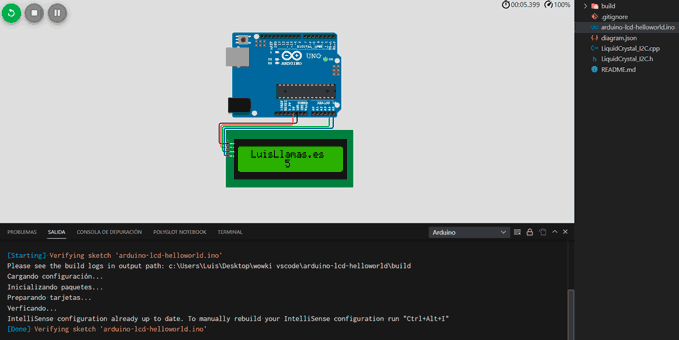
Wowki is actively under development and improvement. The two most awaited features include a VSCode extension that allows testing our code in a Wowki simulation directly. I have been able to test the development and it is truly very impressive and useful.
The other awaited feature is an enhanced debugger, allowing interactive debugging like that found in a desktop IDE (with Breakpoints, Stepping, Watches). This would be a very interesting addition and would make programming processors much faster than doing it physically.
In conclusion, Wokwi is a very useful tool for those who want to experiment with electronics virtually. It is highly applicable both for avoiding making prototypes and in educational contexts and STEAM technologies.
Wowki is available on the project page at https://wokwi.com/, as well as in the code repository at https://github.com/wokwi.
